Adding a White Wash to a Blue Dresser
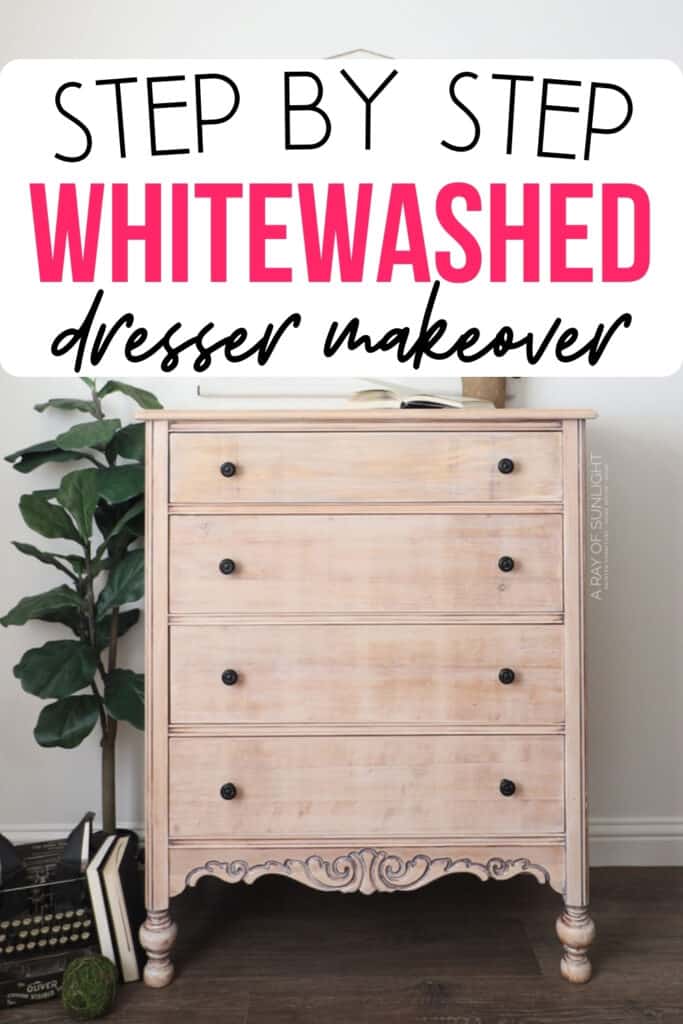
Learn how to turn your old dresser into a raw wood / whitewashed beauty with this step by step tutorial. Here's our DIY Whitewash Dresser Makeover!
Get more DIY dresser ideas here!
PIN THIS TUTORIAL FOR LATER
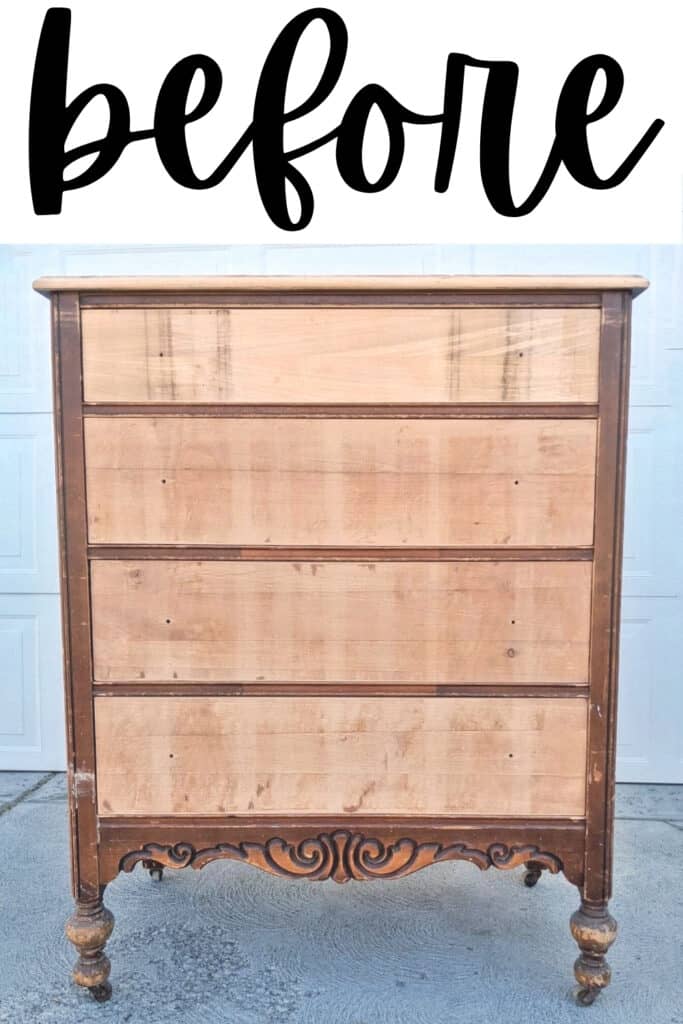
Here's what the dresser looked like when we bought it on facebook marketplace.
The previous owner removed most of the damaged veneer before she sold it to me.
She was probably completely worn out by the time she got it to this point.
I can't blame her though, if you don't know the trick, removing veneer can be a huge pain!
Since she already did so much work, I decided to roll with all of the raw wood.
Thankfully I recently learned the easiest way to remove veneer from furniture, so I was able to easily finish removing the veneer on the top.
I wanted a raw wood look for this dresser, basically exactly how it looked when I was done sanding.
As an Amazon Associate, I earn from qualifying purchases. I also may earn from other qualifying purchases with other companies or get free product to review and use. All opinions are my own.
DIY Whitewash Dresser
Supplies Used:
- 3×4 Vacuum Compatible SurfPrep Sander Use code RAY10 to get 10% off your order
- My favorite regular Sandpaper
- Shop Vac
- Tack Cloth
- Water-Based Polyurethane
- Foam Sponge
- Disposable Gloves
- White Paint for Whitewash
- My Favorite Paint Brush
- Lint Free Rags
- New Knobs
How to Whitewash Raw Wood
- Remove the Old Finish
- Seal the Raw Wood
- Whitewash
- Topcoat
Step One: Remove the Old Finish
First, I got to work sanding off the old finish that was left on the dresser.
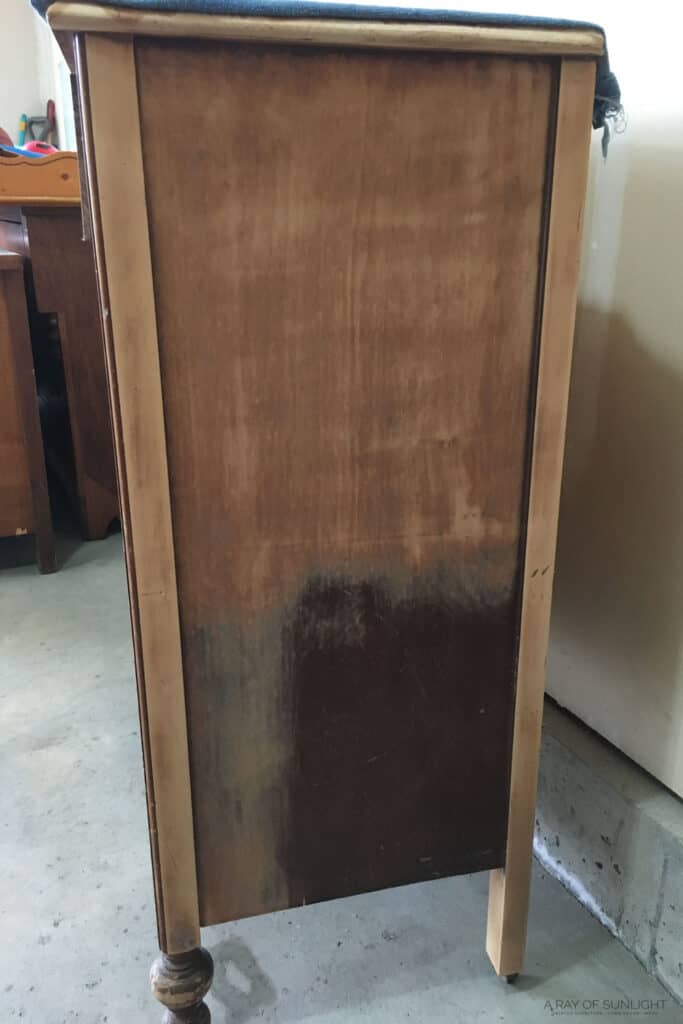
This old antique dresser sanded down pretty fast since the old finish was dry and pretty thin.
I started by sanding it with 100 grit sandpaper to get most of the finish off as fast as possible.
I used my favorite little SurfPrep sander, but you could sand with any ole sander for the most part.
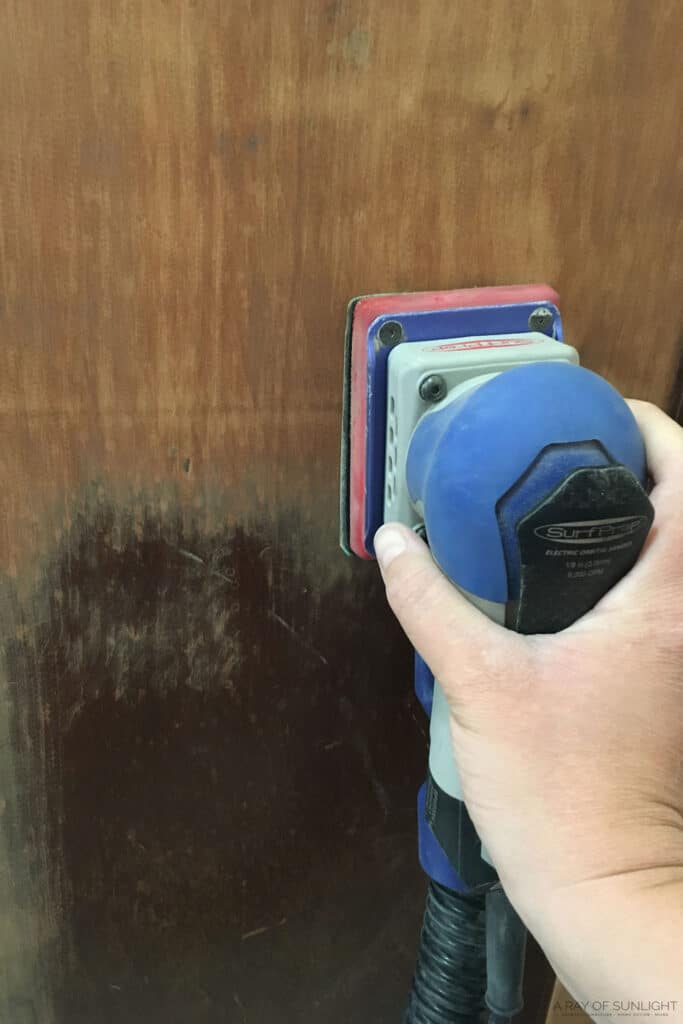
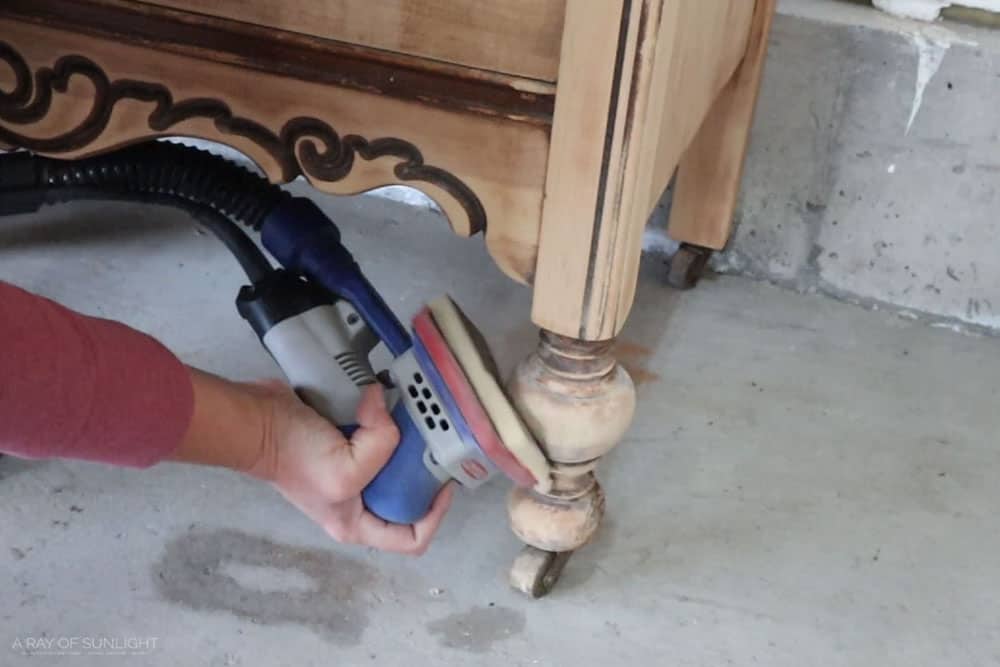
I love this surfprep sander because of the foam sandpaper I can use with it, and because it's a rectangle, so I can get right up to the edges and in the corners with it.
Learn more about the SurfPrep Sander along with my honest review here!
IF you use an orbital sander, you'll need to hand sand the corners and edges.
After everything was sanded with 100 grit, I sanded everything down with 150 grit sandpaper and then with 220 grit sandpaper.
I used 150 instead of jumping straight to 220 to help avoid any sanding marks that come from using a power sander.
I also tried to sand slower, without applying very much pressure to the sander to help avoid those sanding swirls.
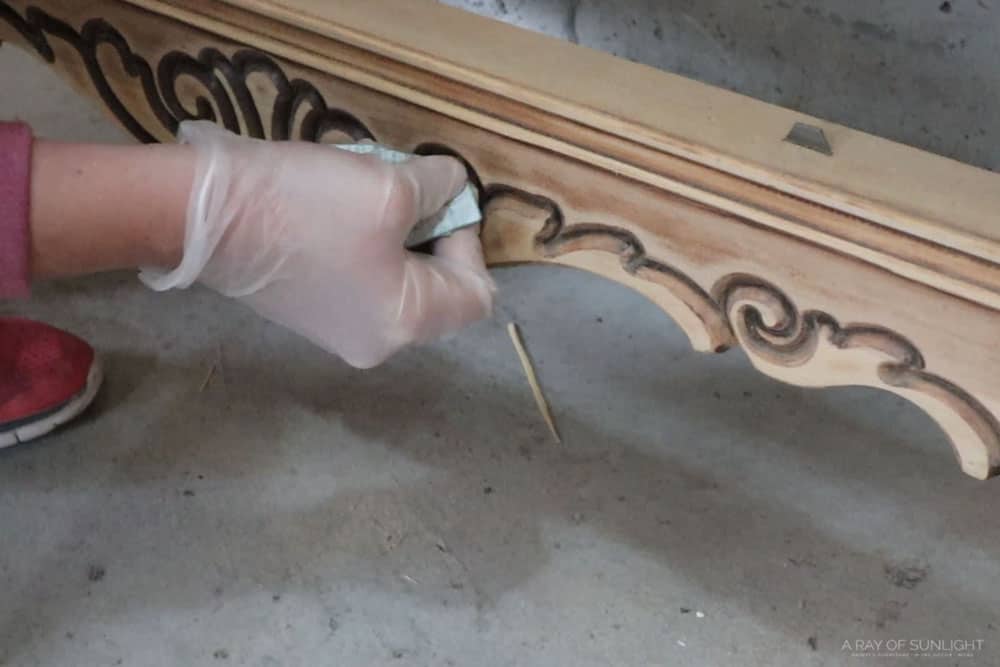
For the details at the bottom, I just folded a piece of sandpaper in half. Then I removed some of the dark stain, but left most of it to show off the pretty details.
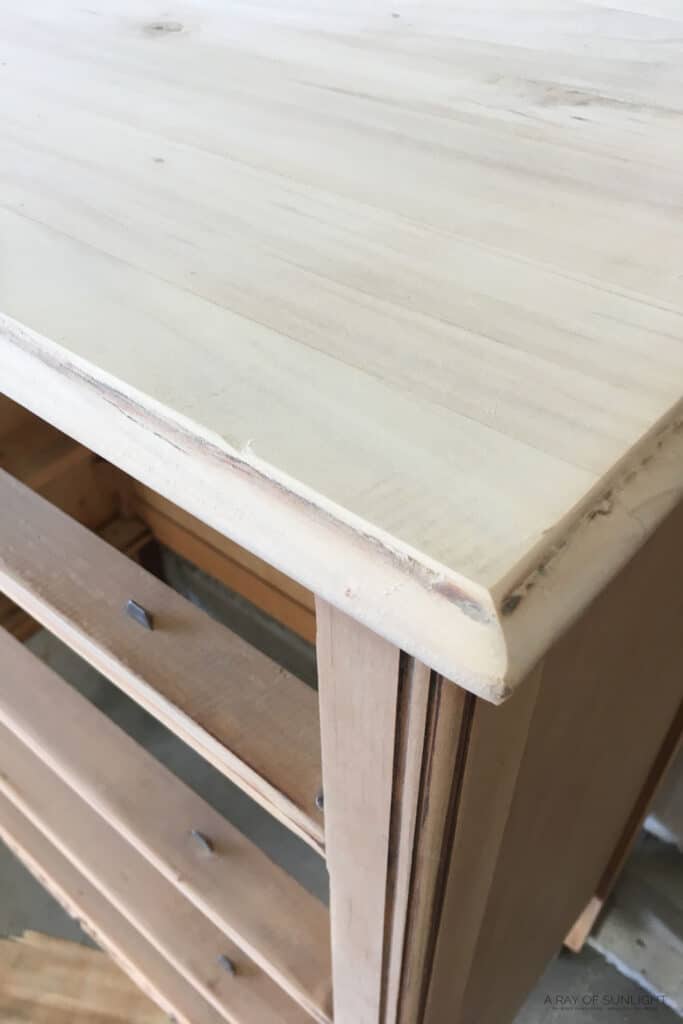
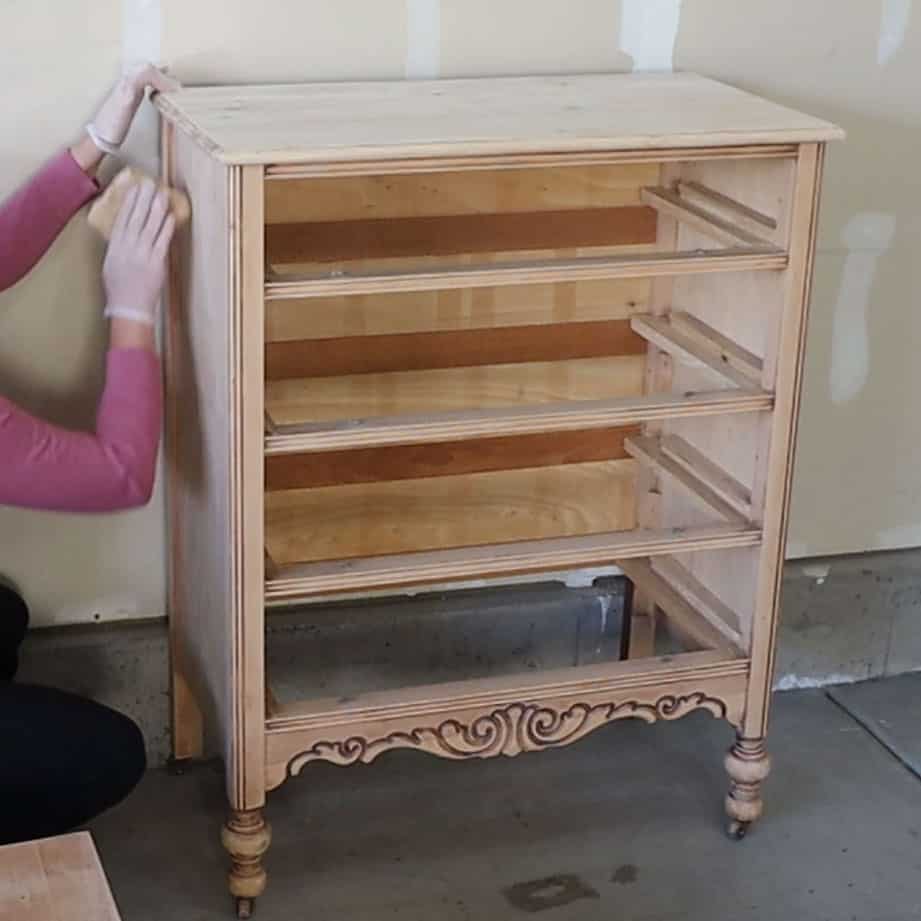
I ended up sanding the entire thing, even the drawers and top, with 220 grit sandpaper before moving on.
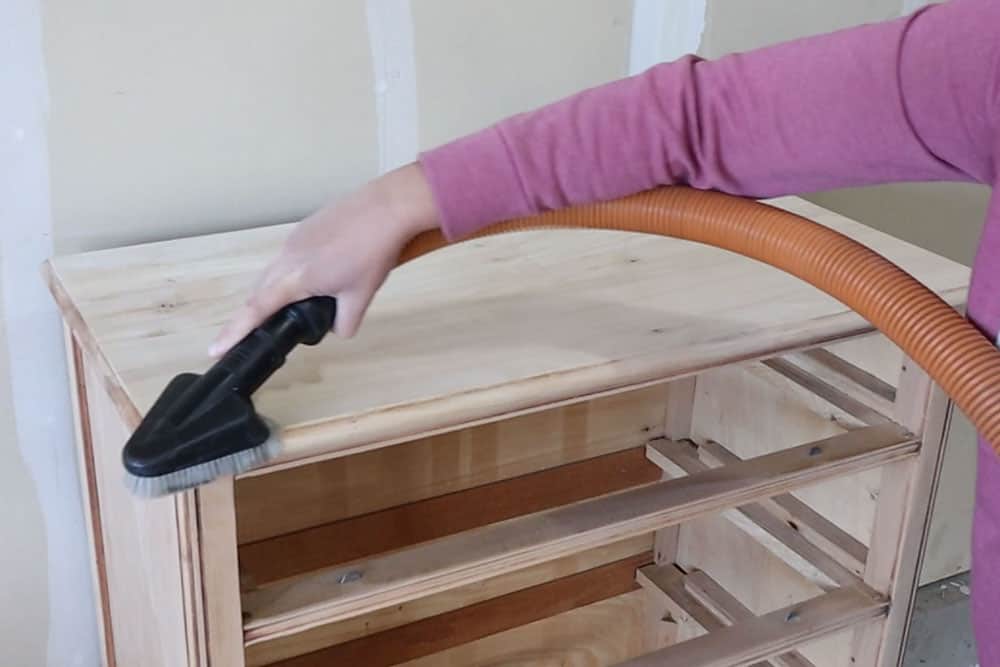
And then I removed the dust that was left behind with a vacuum and then with a tack cloth. (Tack cloths are amazing at picking up all the little specks of dust left!)
Optional: Chemical Stripper
You don't have to be limited to only sanding to remove the old finish though!
Sometimes the old finish is hard to remove by sanding.
In that case, a chemical stripper is the best option.
Click on over to this post to learn about our favorite way to use a (not harsh) chemical stripper.
Step Two: Seal The Raw Wood
Then I wiped a coat of poly all over the raw wood to keep the whitewash from soaking into the wood too much.
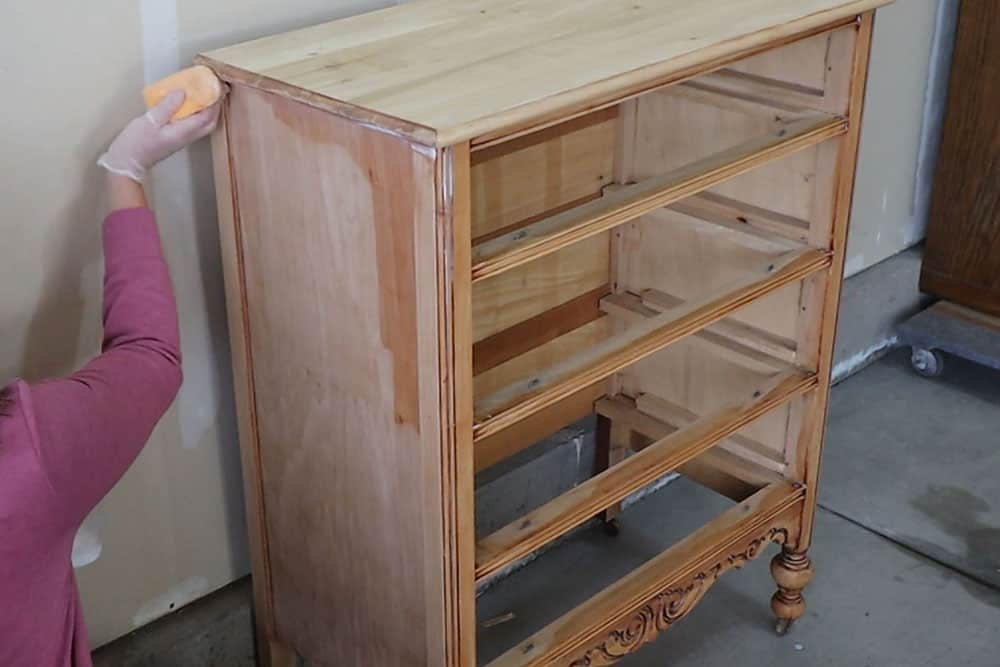
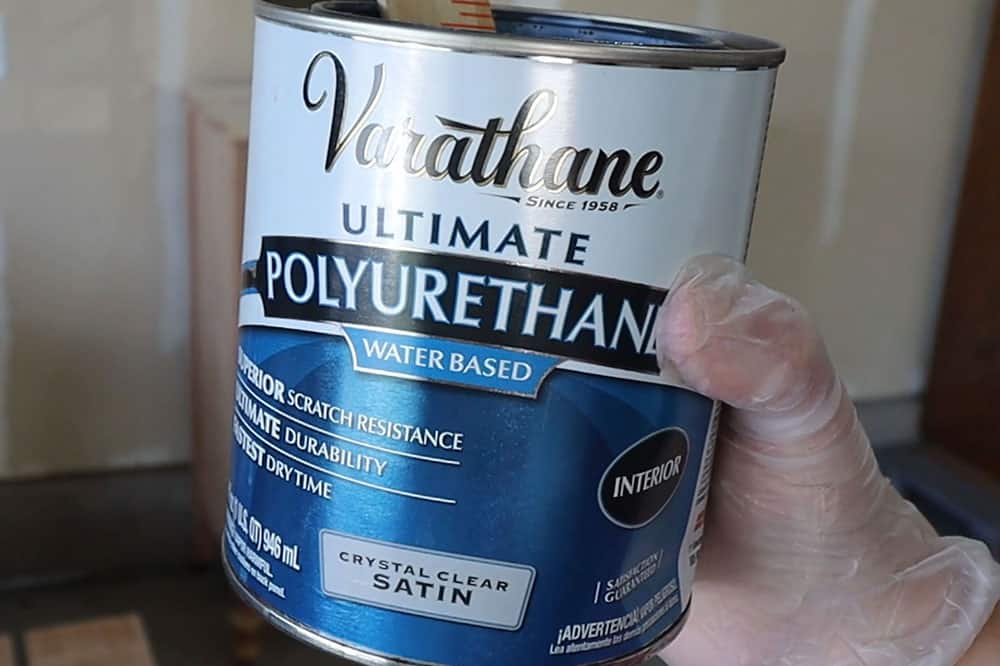
Notice how much darker the wood gets from just one coat of poly on it!
I wiped the poly on with a foam sponge.
I love the painting sponge from Country Chic Paint to apply poly by hand, but the ones I have right now have been used and abused.
So I tried this tile grout sponge out and I was super happy with the results!
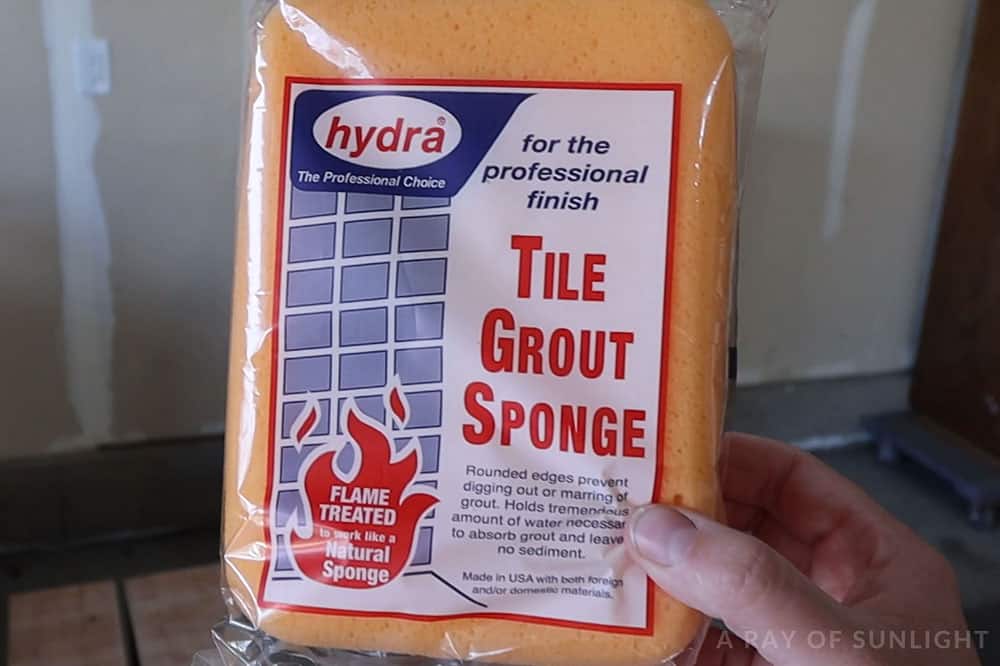
Since the 1 coat of poly is so thin, it only acts as a barrier to keep the whitewash from soaking in too much (and making it so you can't wipe it back off).
And since the whitewash is such a thin coat, it has no problem adhering to the 1 coat of poly.
So the poly gives you more control over the whitewash, and the whitewash lightens up the sealed wood.
Optional: Staining
For some reason, the wood on the top drawer and the wood on the top were different than the rest of the dresser.
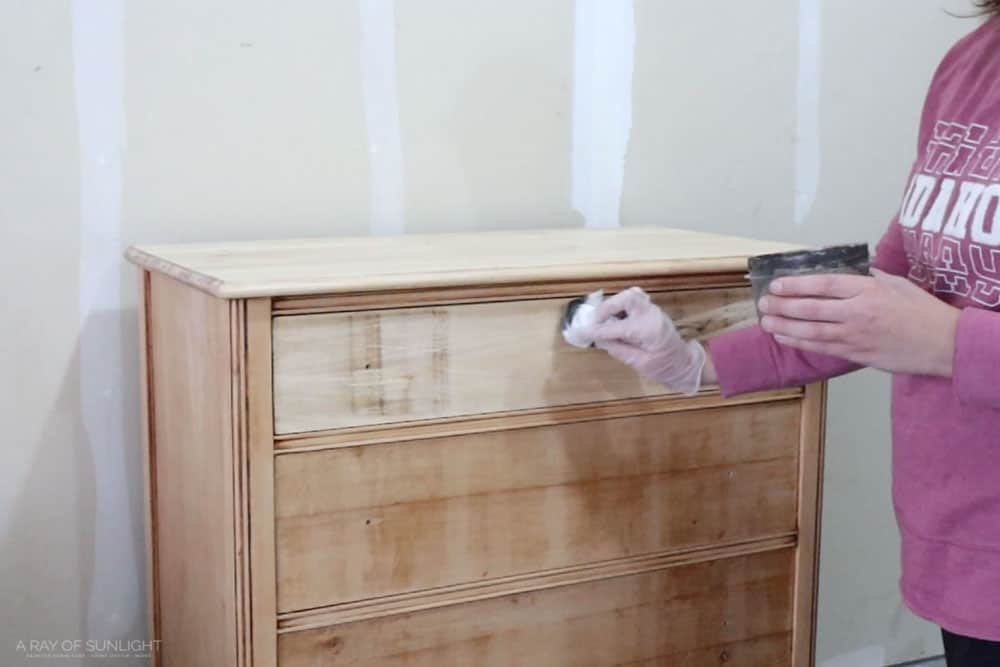
Everything else was a lot more orange.
So I tried to stain the wood to a closer shade of what everything else was before I moved onto whitewashing.
First I used a little mix of brown latex paint and water to see if that helped, but it was definitely not even close.
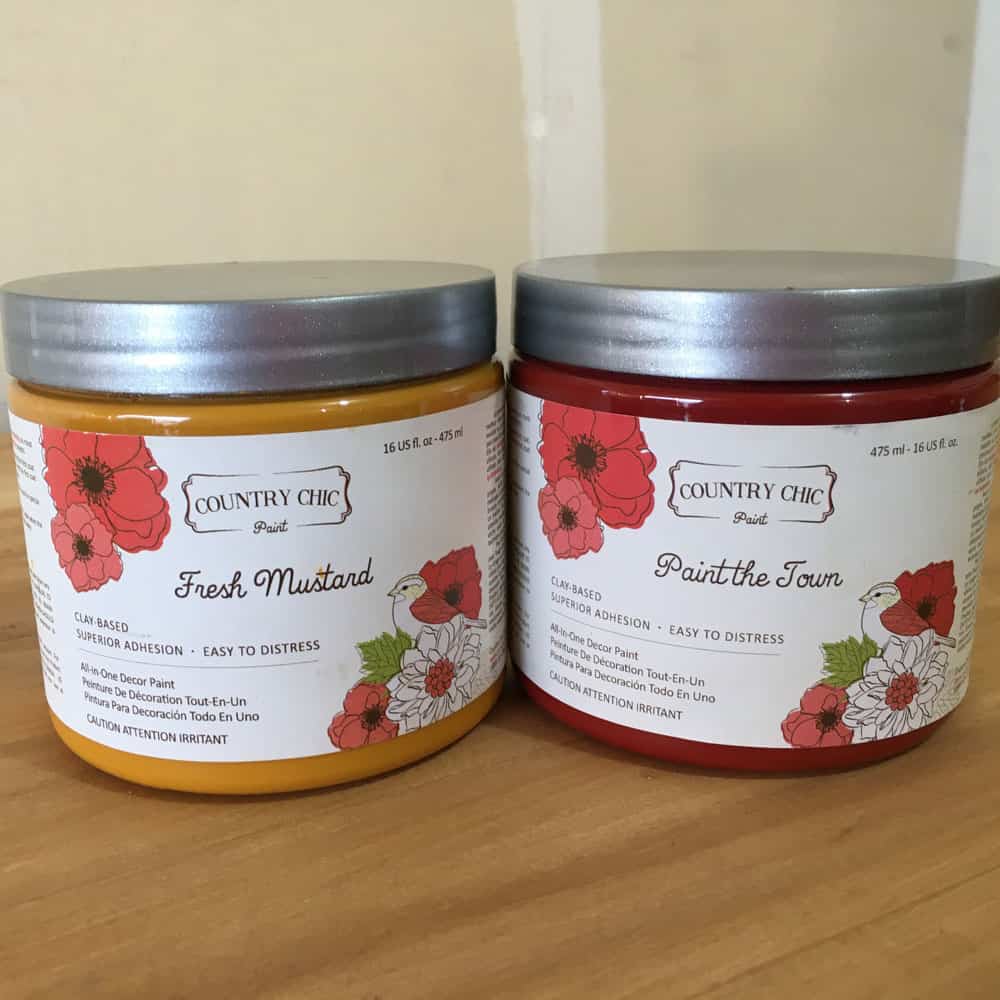
I didn't have any orange paint to try to stain the wood to match the orangey tones, so I grabbed the red and yellow paint that I have on hand, and mixed up an orange.
I mixed it with more water to create basically a whitewash, but orange instead of white.
Then I wiped it onto the top of the dresser and top drawer.
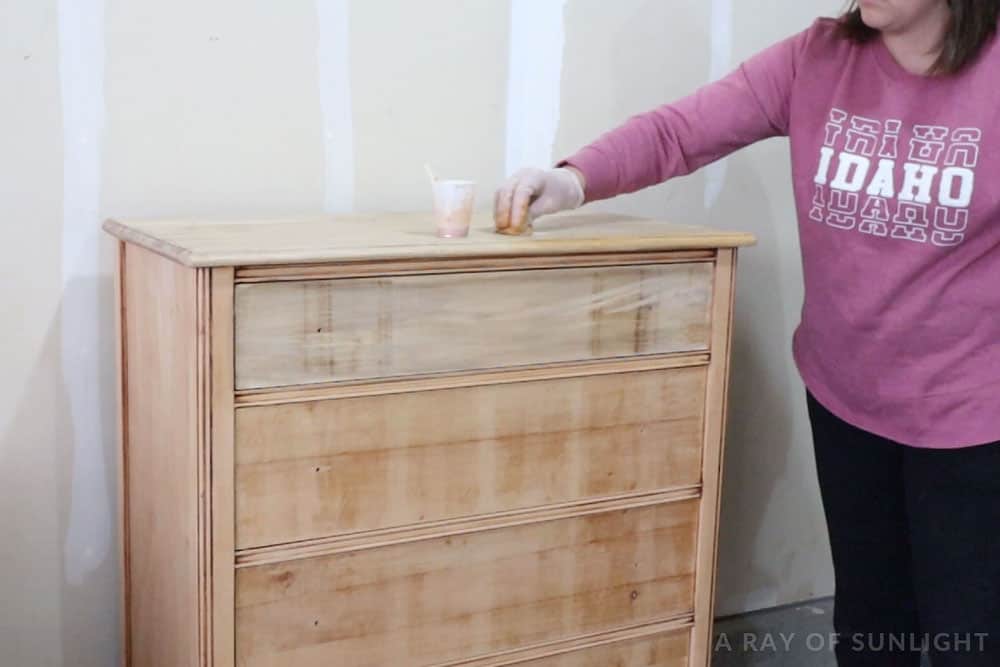
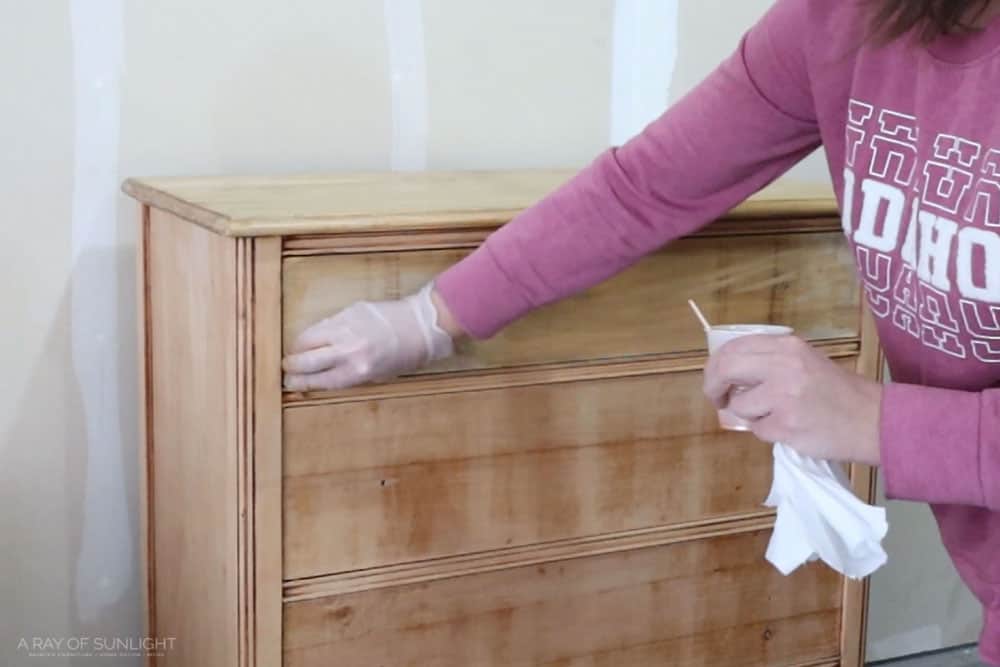
When it dried it was a pretty close match!! I'm not gonna lie, I was pretty excited about how close it was! Haha
I put a coat of poly over the orange wash to seal it in and make sure everything was the same before moving on.
Step Three: Whitewash
How to Make Whitewash Paint
After the poly was dry, I watered down some white chalk paint I had on hand.
Any water-based white paint will work for this.
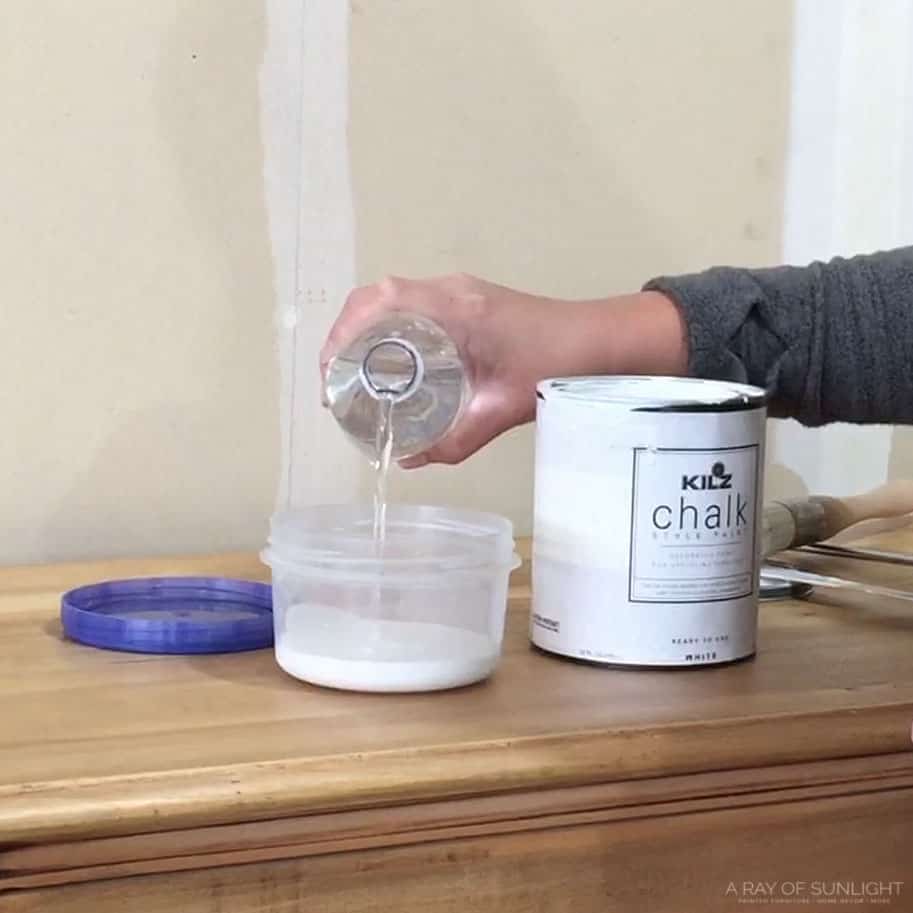
I didn't really measure the water to paint ratio, but basically, you want it to look like water that is tinted white.
Applying Whitewash
Then I got a little bit of whitewash on my paintbrush, and brushed it on, staying with the direction of the wood grain.
I worked in really small sections so it didn't have time to dry or soak into the wood much.
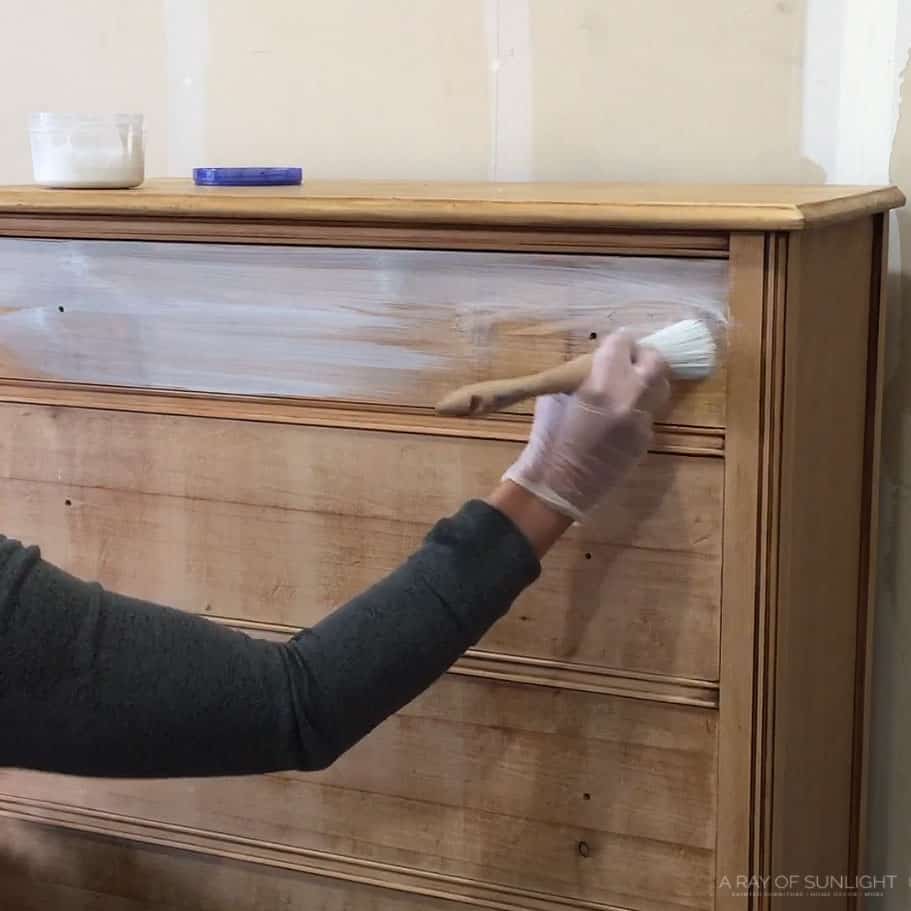
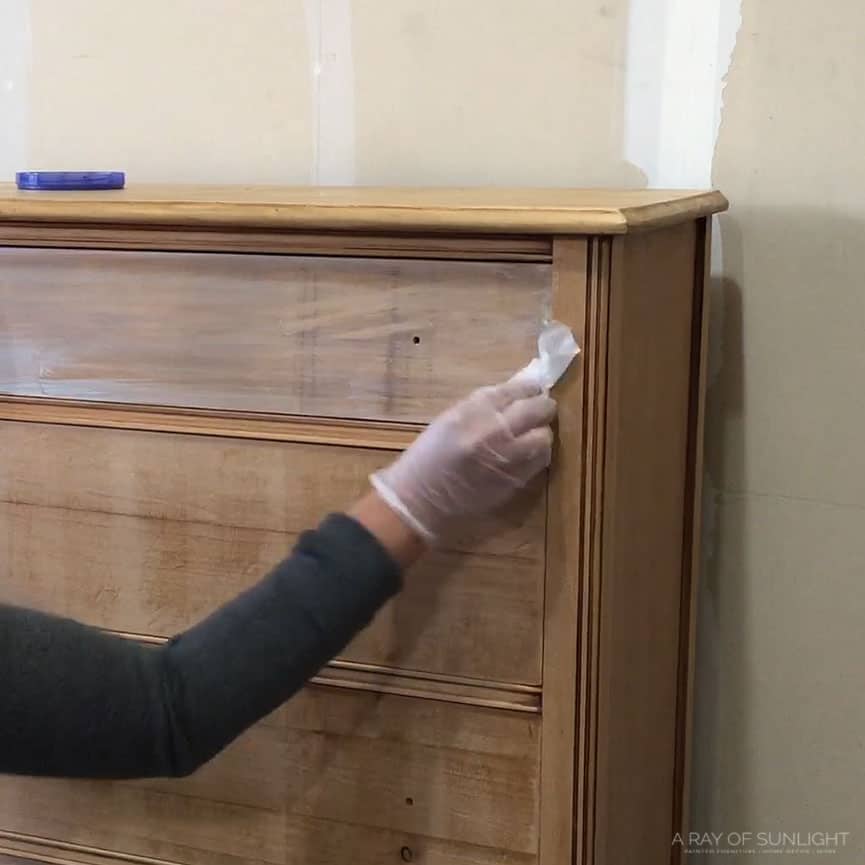
Then I used a lint-free rag to wipe it off and spread it out a little more.
I actually used the same rag for the whole dresser.
The next day when I checked it out, the whitewash was a little thicker on the top drawer than I wanted.
So I sanded it down a bit and added just a little bit more whitewash to try to even it out.
Step Four: Topcoat
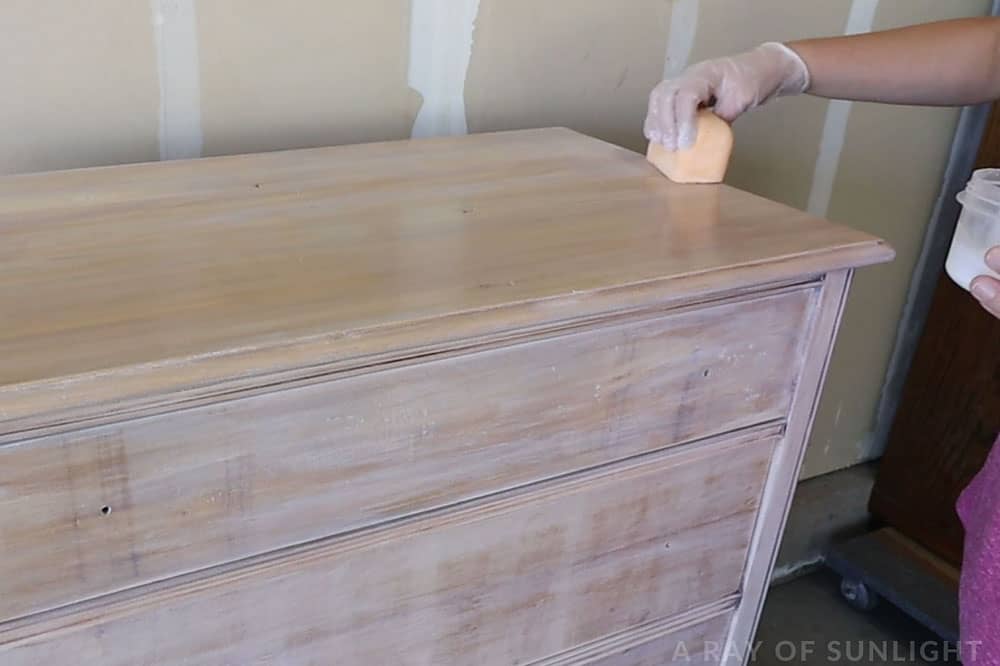
When I was happy with everything, I wiped the dresser down with a tack cloth and then wiped on 3 more coats of poly.
If you have a paint sprayer, you can also spray the poly on for a more even finish!
Each coat of poly dried in 15 minutes or so, so it went really fast!
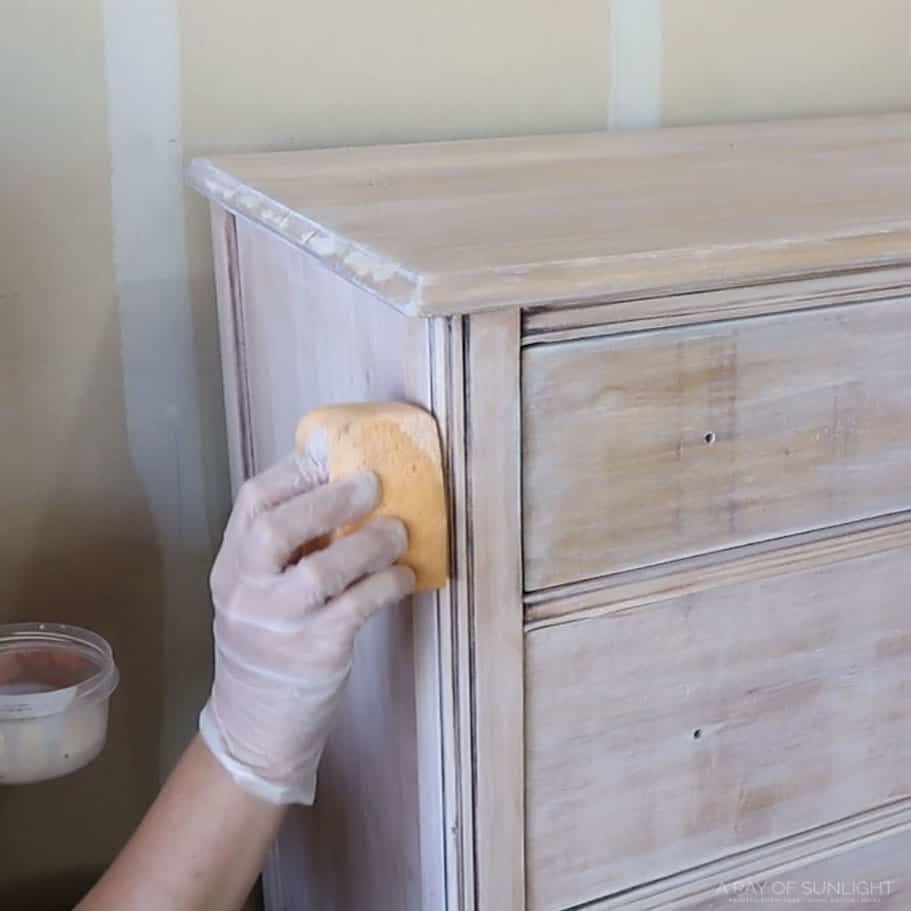
I used satin poly for the first coats and then the last coat I used a matte poly to decrease the shine.
I love the extra durability the satin poly provides, but the flat finish of the matte poly.
**Notice that the whitewash blended better with the raw wood after being sealed with poly.
Step Five: Finishing Touches
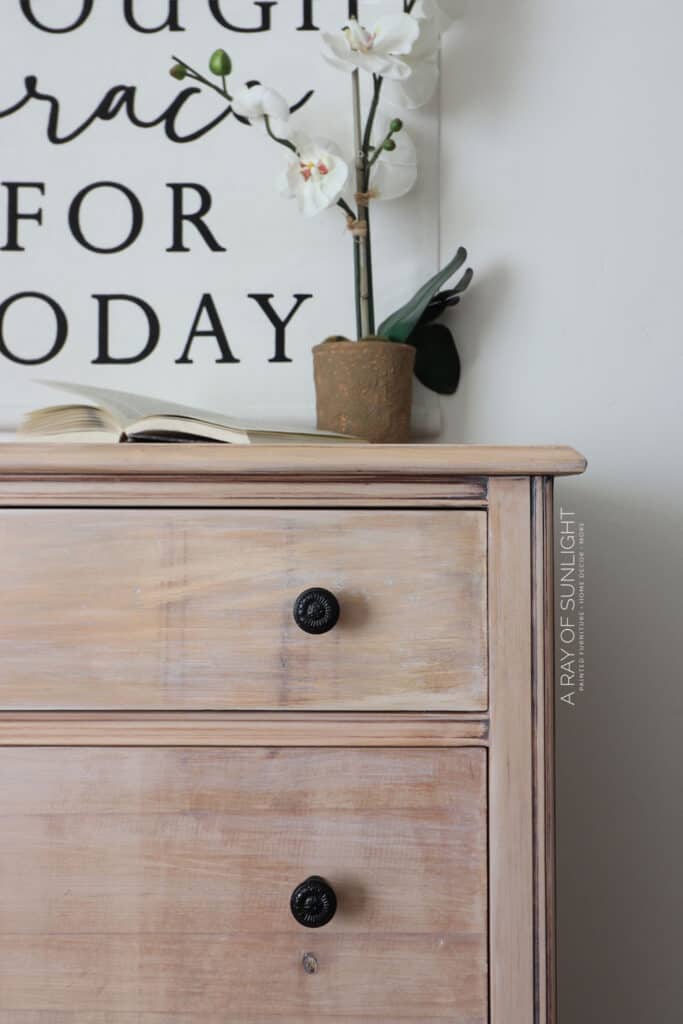
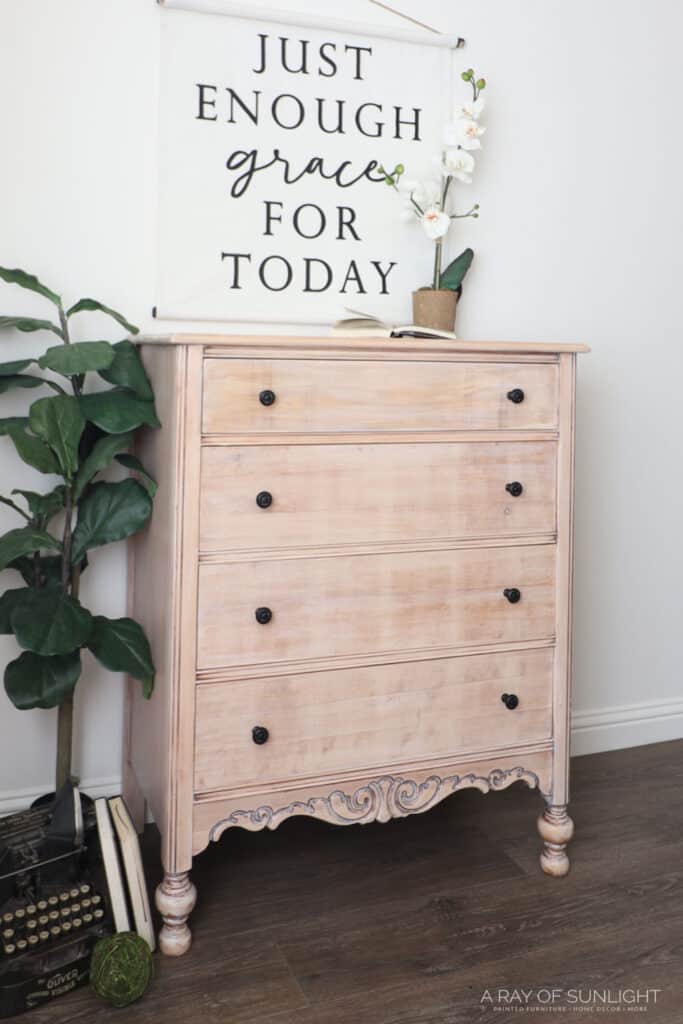
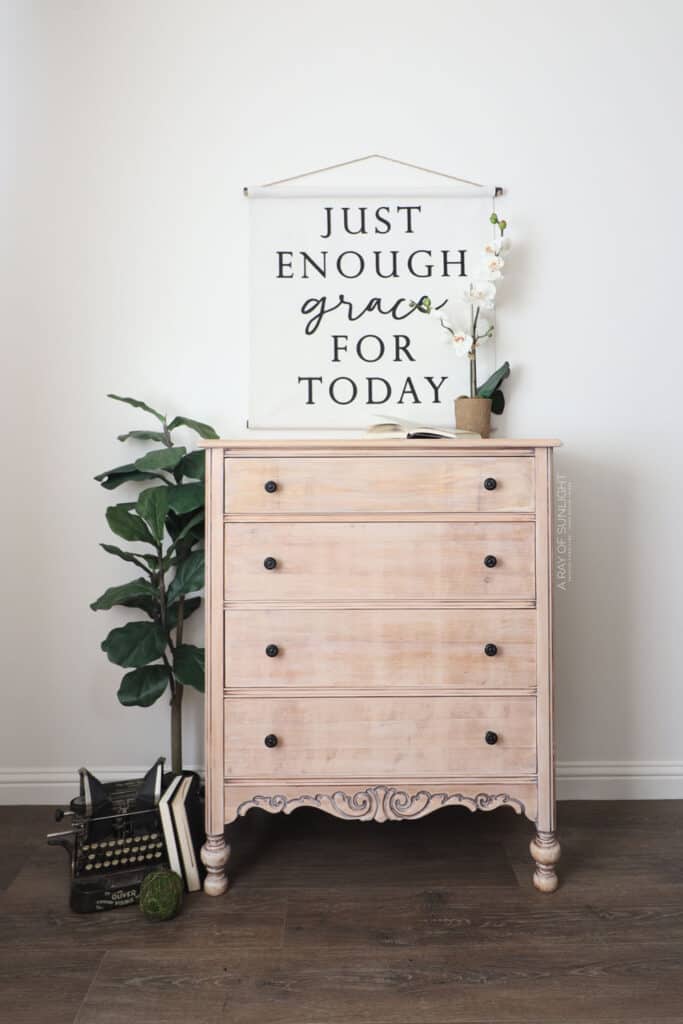
To finish it up, I added these cute little dark knobs to contrast the light raw wood look.
And to accent the dark stain that I intentionally left in the details.
Watch the full makeover with this video!
Here's what it looks like now!
PIN THIS TUTORIAL FOR LATER
More DIY Whitewashed Furniture
- Weathered Wood Dresser
- How to Whitewash Furniture – Cedar Chest
- Removing Paint and Whitewashing a Dresser
Follow us on YouTube to get more tips for painting furniture.
Or share your project with us on our Facebook Group and be part of our community. See you there!
Source: https://arayofsunlight.com/diy-whitewash-dresser/
0 Response to "Adding a White Wash to a Blue Dresser"
Post a Comment